Services
Dry cleaning
Removing dust and surface dirt with no water or solvent. Often the first step, sometimes the only one needed.
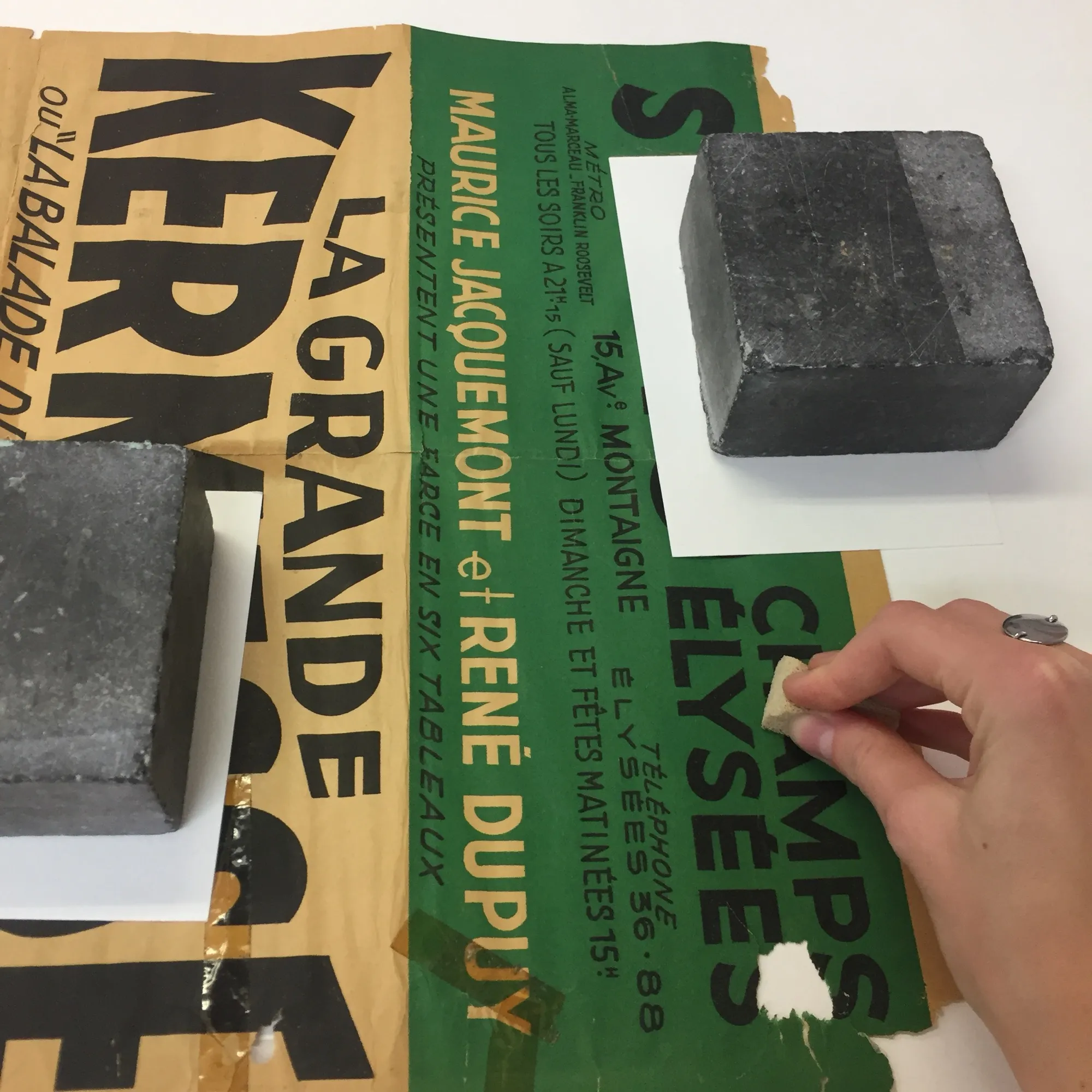
Dry cleaning is one of the first steps of the restoration process. Dust, dirt and other particles are removed from the surface with a gentle mechanical movement and special erasers. This first treatment is sometimes enough on its own.
Why start here?
Dust is not only unsightly. It holds moisture, attracts mould and, as soon as a wet treatment begins, it is driven into the fibres. Cleaning dry first protects the paper for every step that follows.
How I work
- I always test a discreet area first: some inks, graphite and pastel cannot take any rubbing.
- I use soft brushes, latex sponges and powdered or block erasers, chosen for how fragile the paper is.
- I work from the centre towards the edges, in one direction, so fragile edges do not tear.
What it does not do
It does not remove rust-coloured spots (foxing), yellowing or water stains, which are in the paper, not on it. For those, see aqueous treatment.
In the work
- Manuscript leaf, Latin text with rubrics and painted initials
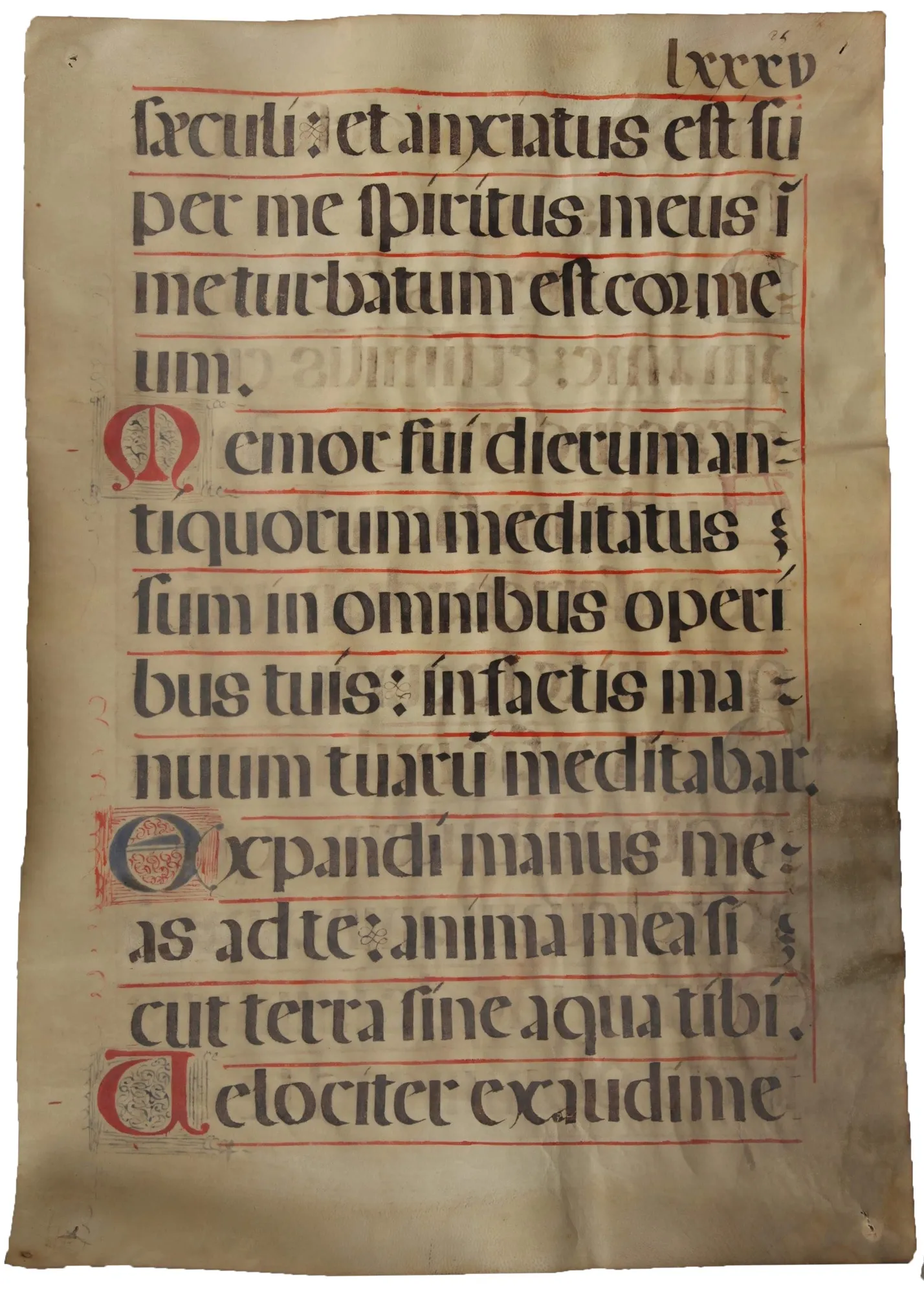
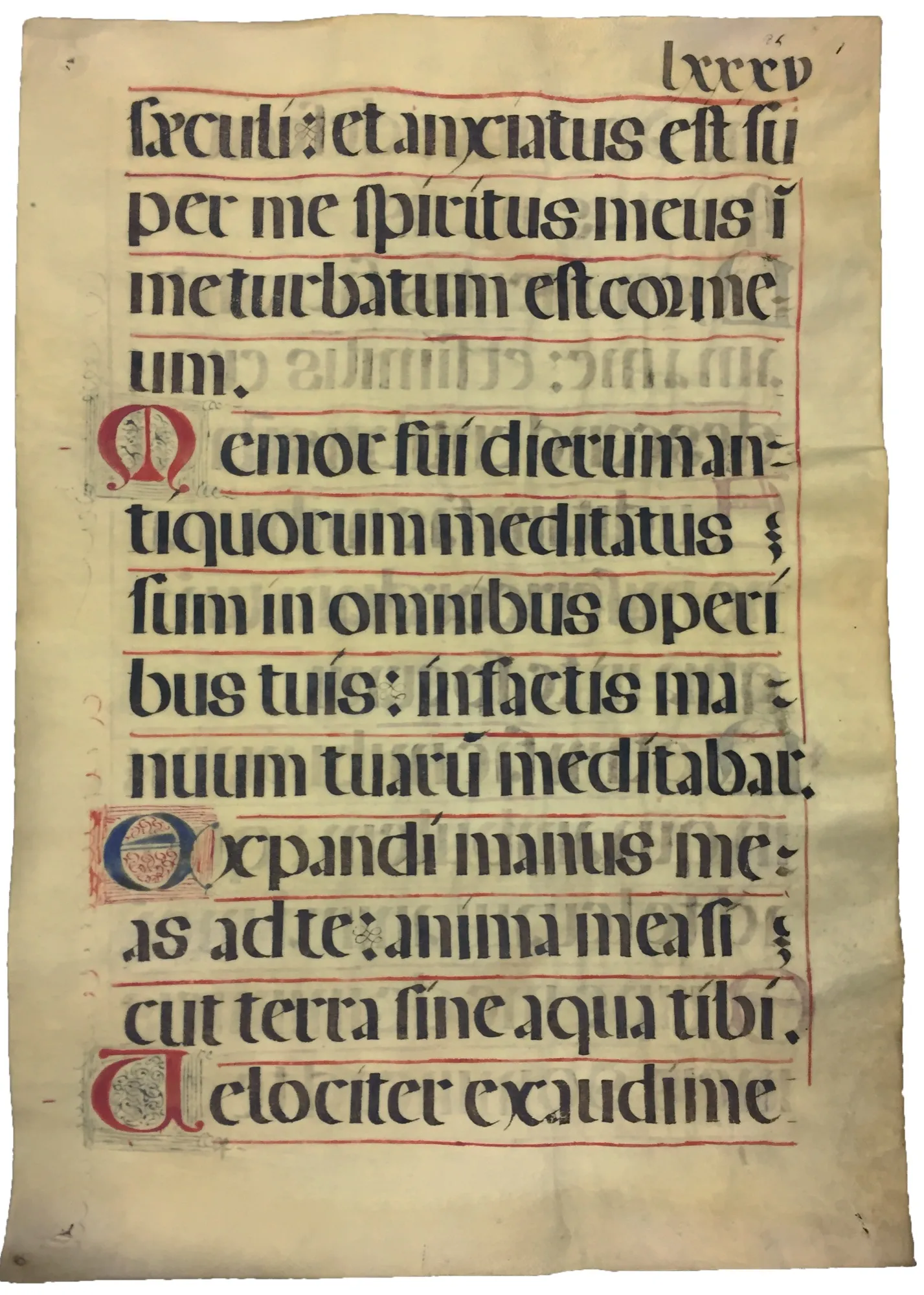
A manuscript psalter leaf
A single leaf numbered “lxxxv”, carrying the verses of Psalm 142. Careful dry cleaning gave the text back its legibility and the initials their colour.
- Printed poster
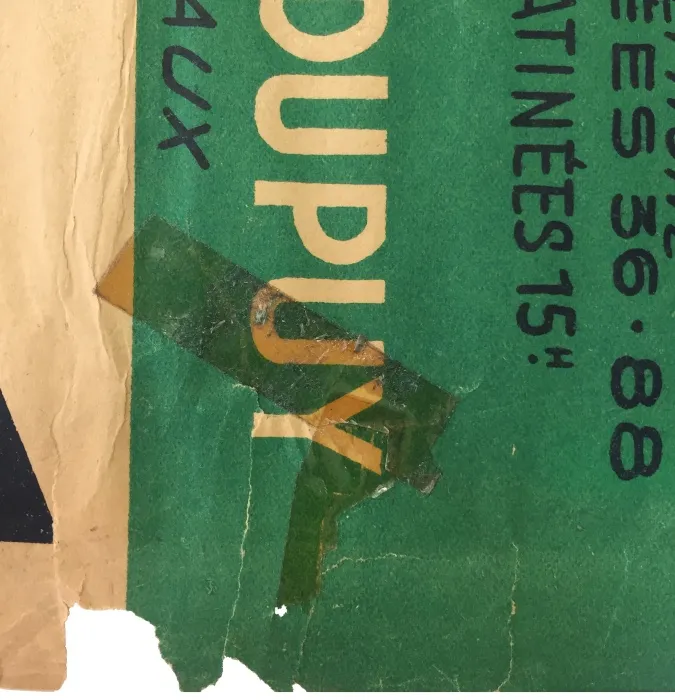
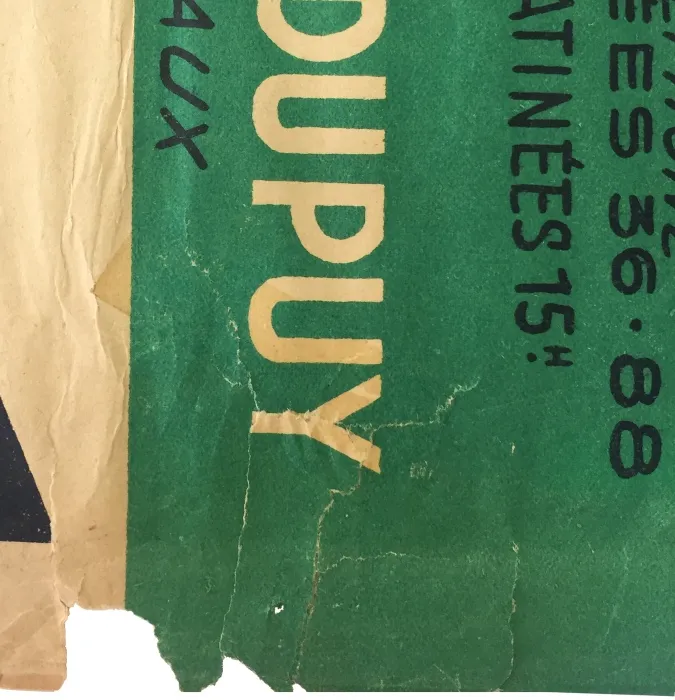
A theatre poster: La Grande Kermesse
A poster for Michel de Ghelderode's La Grande Kermesse, soiled and once repaired with adhesive tape. Dry cleaning, then tape removal.